
Wells - monitoring water level in underground wells
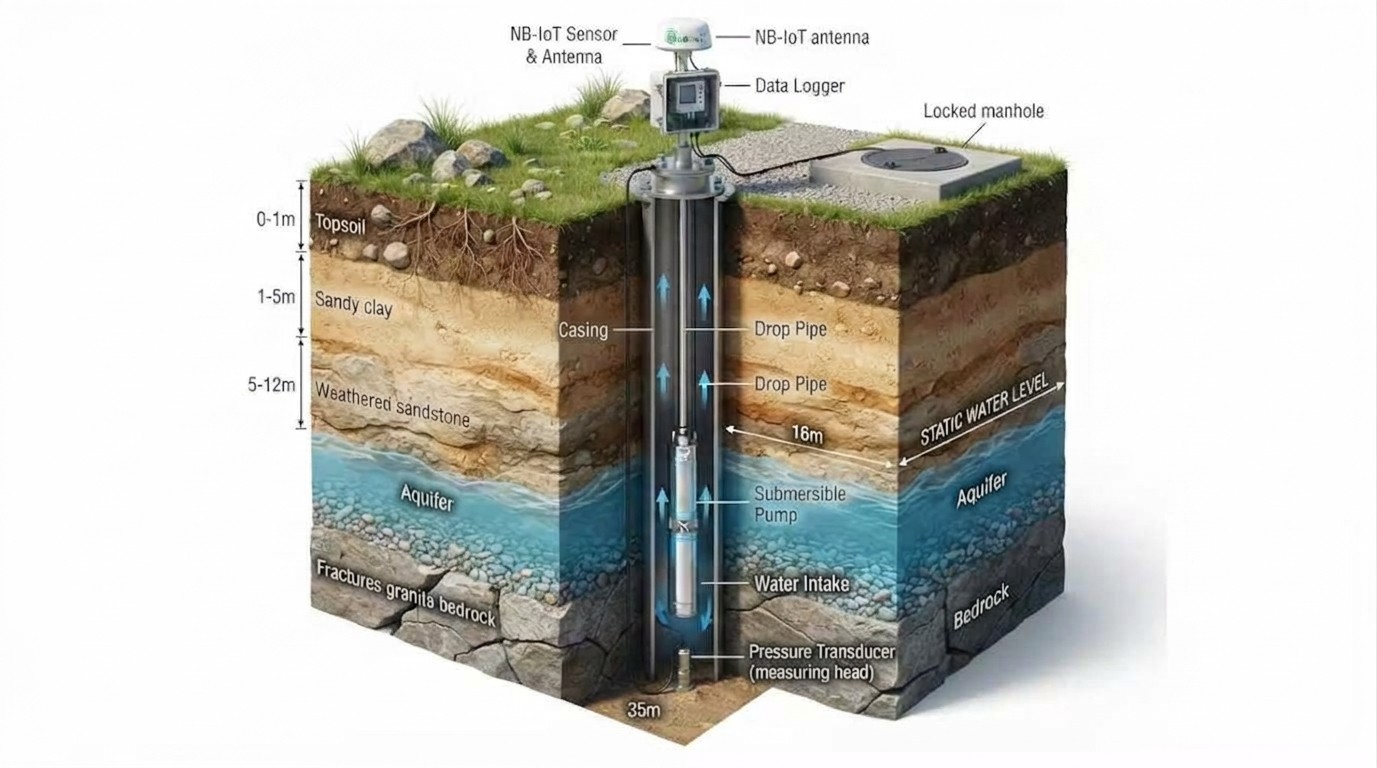
Wireless IoT sensors measure the water level in underground wells and transmit the data over long distances, with no need for power supply or cabling. Battery-powered sensors work without interruption for many years.
Challenge
Deep wells located in remote places require regular water level checks. Manual measurements are time-consuming, expensive and do not allow a quick response to a falling water table or the risk of a well running dry.
Solution
Water level sensors (e.g. pressure or ultrasonic) installed in the wells emit readings at regular time intervals. The data is accumulated in the Seraphin platform and available from a browser and a mobile device.
The Seraphin IoT platform lets you remotely measure the water level in underground wells and track how it changes over time. The measurement history helps to assess well yield, plan water abstraction and detect seasonal drops in the groundwater level.
When the water level falls below a defined threshold, the system sends alerts, so you can react before the pump is exposed to dry running or the water runs out. Thanks to long-range connectivity, the sensors also work in places without mobile coverage or power, and the battery lasts for many years.
The advanced BMS capabilities of the platform also allow integration with pump controllers, so the pump can be switched off automatically when the water level is too low.
Key benefits
- Continuous monitoring - water level readings arrive automatically at set intervals, with no site visits needed.
- Trend analysis - long-term charts show seasonal changes, the effect of heavy pumping and the recovery time of the well.
- Flexible alerts - notifications by e-mail or SMS when the level drops below, or rises above, defined thresholds.
- Lower costs - fewer trips to remote locations and better planning of maintenance and drilling work.
- Easy installation - wireless, battery-powered sensors need no cabling and can be mounted in existing wells.
Typical applications
- Municipal and private water intakes
- Farms and irrigation systems
- Monitoring of the groundwater table near construction sites and mines
- Environmental and hydrogeological research
Collected data can also be exported or shared with other systems through the platform’s API, which makes it easy to prepare reports for water management authorities.